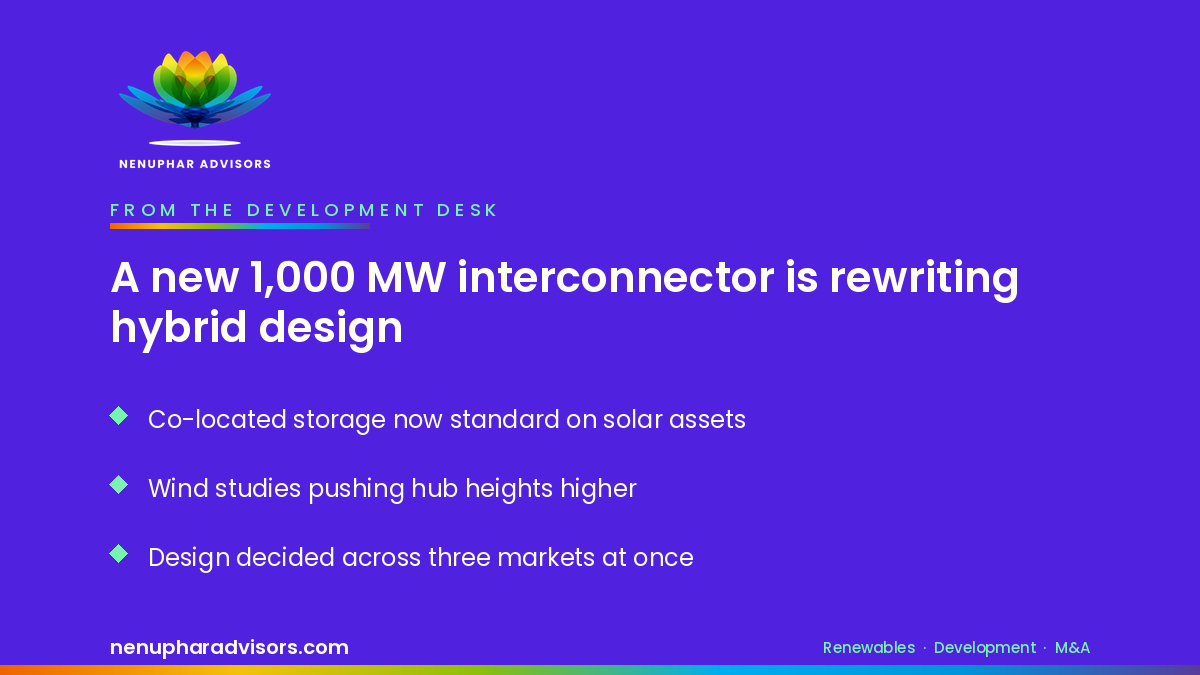
A new 1,000 MW interconnector is rewriting hybrid design
A 1,000 MW interconnector between Portugal and Spain went live this month — quietly rewriting the calculus for hybrid projects across Iberia.
Cross-border capacity used to be a constraint developers designed around. Now it’s a variable in the base case.
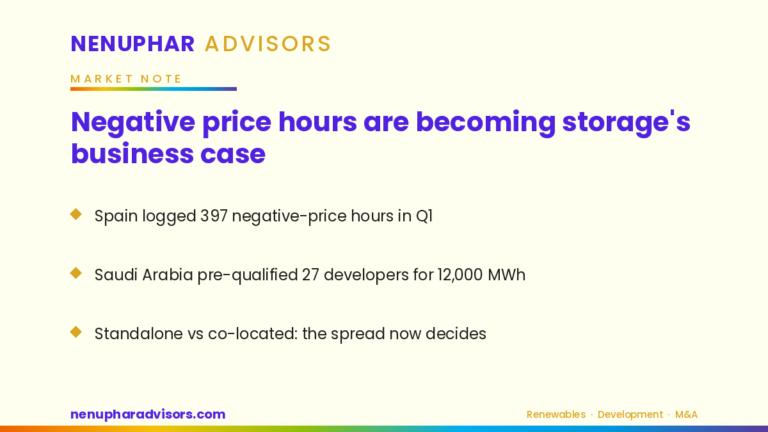
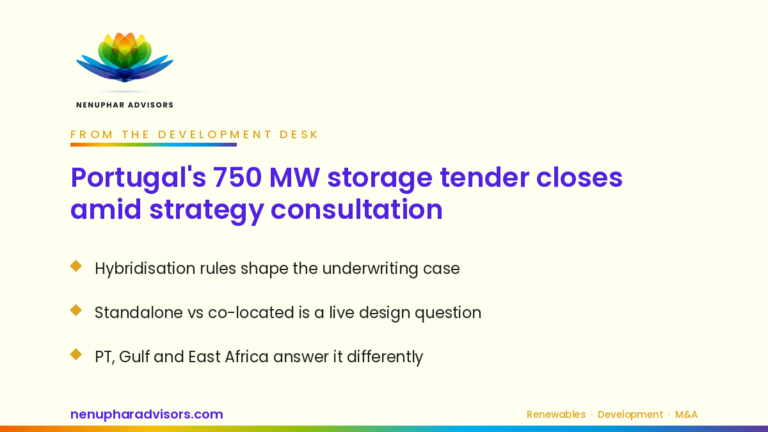
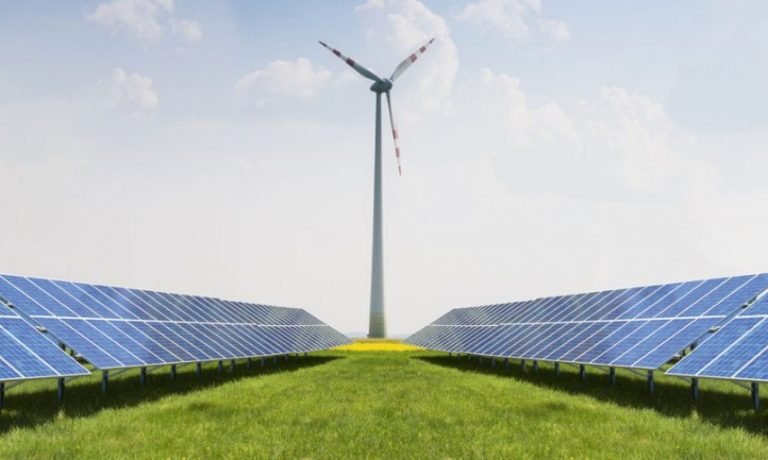
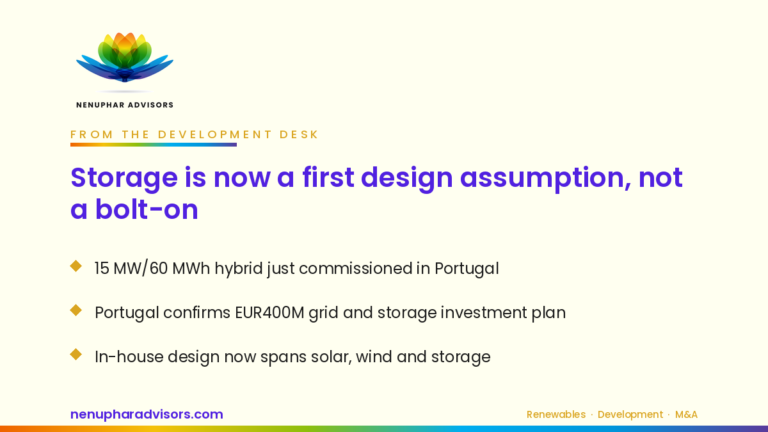
We’re seeing the same shift on the ground: co-located storage retrofits on operating solar assets, wind resource studies pushing hub heights higher for better load factors, hybridisation decisions made at layout stage rather than bolted on later.
Running project design in-house means we watch this play out across three markets at once — Portugal, Spain and the Gulf — each with its own grid, auction calendar and appetite for co-location.
Iberia has already set fresh daily solar records this year. Demand for well-designed hybrid capacity isn’t slowing down.
The developers building in design flexibility now are the ones with optionality when the rules change again.
Where are you seeing the sharpest design trade-offs in hybrid projects — layout, interconnection, or storage sizing?
#RenewableEnergy #Portugal #NenupharAdvisors #nenupharfrontier #Solar #WindEnergy #BESS #EnergyTransition #GridConnection #Spain #uae #dubai #abudhabi #solarpv #wind #sps #wps #ess #energystoragesystems #greenhydrogen #hydrogen #sustainablefinance #climatechange #climatefinance #cleanenergy #sustainability #innovation #cleantech #renewables #energysector #greeneconomy #greenfinance #alternativeenergy #powergeneration #sustainableinvesting #batteries #energystorage #powermarkets #oilmarkets #oilandgas #linkedinnews #linkedinfinance #hydrogenenergy #hydrogeneconomy #energy #pv #solarenergy #climate #solarpower #power #developer #offshore #windoffshore #floatingwind #floatingoffshorewind #bioethanol #offshorewind #China #EV #evs #AI